Relocation notice
The Crime Laboratory is moving to 135 N. Chestnut Street
The Missouri State Highway Patrol Crime Laboratory, currently located at 1510 East Elm Street, Jefferson City, Missouri, will be relocating to a new facility at 135 N. Chestnut Street, Jefferson City, Missouri, on or about January 1, 2027. Please update your records to reflect the new Crime Laboratory address:
Missouri State Highway Patrol
Crime Laboratory
135 N. Chestnut Street
Jefferson City, MO 65101
Additional information regarding the transition, including any changes to evidence submission procedures or services, can be obtained by contacting the laboratory at (573) 526-6134.
The new building is the State of Missouri Multi-Agency Laboratory Campus, which will also house laboratories for the Departments of Health and Senior Services, Natural Resources, Agriculture, and Conservation. Read about the project (opens on oa.mo.gov).
About the Section
The Toxicology section analyzes blood, urine, and other biological fluids for alcohol, drugs, and some poisons. It performs analyses across a range of investigation types, including driving while intoxicated cases, fatal traffic crashes, unattended or unexplained deaths, drug violations, sexual assaults, and homicides.
The section is also responsible for analyzing beverages for alcohol, in both criminal cases and administrative procedures.
Blood Volatiles Analysis
Approximately 60 percent of the cases received by the Toxicology section involve a request for blood volatiles analysis. Many are DWI investigations, and some involve serious traffic crashes in which people have been critically injured or killed.
The primary purpose of blood volatiles analysis is to determine the concentration of ethyl alcohol within blood. The procedure can also qualitatively identify other volatile organic compounds, including methanol, acetone, 2-propanol, toluene, and formaldehyde.
The section uses an automated process called headspace gas chromatography. When a sample is heated, any volatile organic compounds present in the liquid will also be present in the gaseous space above it. That gaseous sample, referred to as the headspace, is analyzed with a gas chromatograph, allowing the volatile compounds to be identified and potentially quantified.
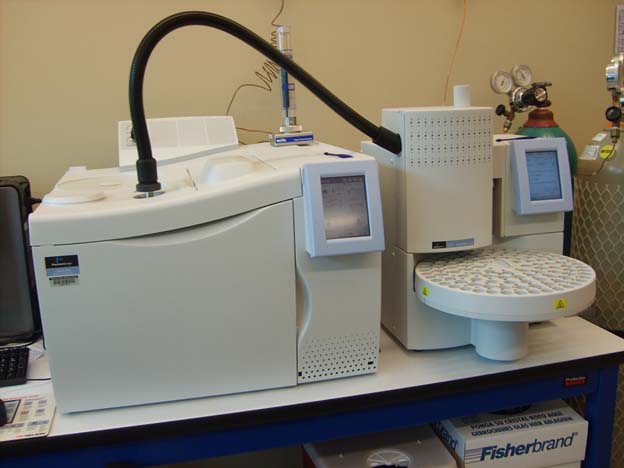
GC headspace used for blood testing.
Drug Testing
Approximately 40 percent of the cases received by the Toxicology section involve a request for drug testing. Testing a biological sample for drugs involves two types of test: screening tests and confirmatory tests.
Drug Screening Tests
Biological samples submitted for drug testing are first subjected to a screening process using an enzyme-linked immunosorbent assay (ELISA). A Tecan Freedom EVO-based ELISA system screens samples for the following drugs and drug classes:

Tecan instrument used for screening tests.
Confirmatory Tests
All samples must undergo additional testing after screening to confirm the presence of any drugs. Confirmatory testing uses gas chromatography/mass spectrometry (GC/MS) or liquid chromatography/mass spectrometry (LC/MS).
The specific procedure is chosen according to the preliminary screening results. These procedures isolate different classes of drug from the biological sample, a step also referred to as extraction. Samples are treated with a range of organic solvents and aqueous buffers designed to adjust pH and isolate the drug class into a small, concentrated amount. The concentrated sample is then analyzed by GC/MS or LC/MS, allowing drugs to be confirmed by their unique chemical structure.
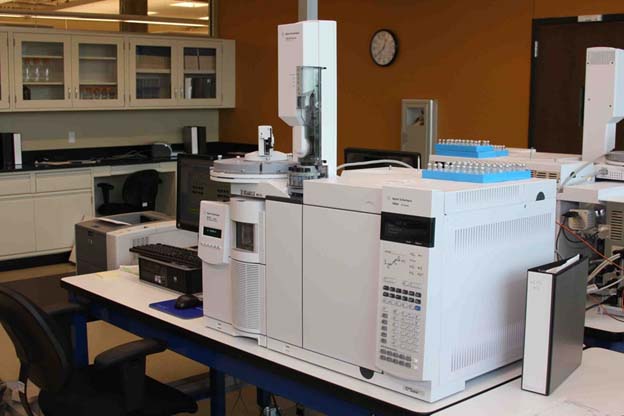
GC/MS used for drug confirmation.
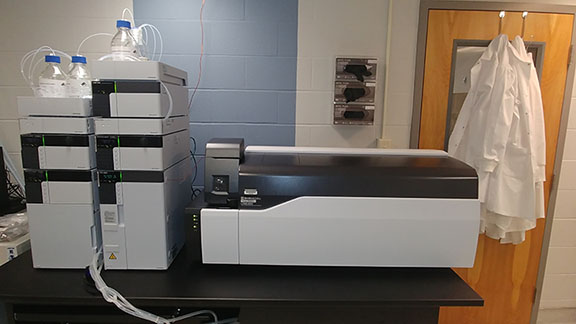
LC/MS used for drug confirmation.
Professional Organizations
Toxicology staff participate in and reference the work of the following bodies.
Get in touch
Contact the Crime Laboratory
Office hours are 8:00 AM to 4:30 PM, Monday through Friday.