
Relocation notice
The Crime Laboratory is moving to 135 N. Chestnut Street
The Missouri State Highway Patrol Crime Laboratory, currently located at 1510 East Elm Street, Jefferson City, Missouri, will be relocating to a new facility at 135 N. Chestnut Street, Jefferson City, Missouri, on or about January 1, 2027. Please update your records to reflect the new Crime Laboratory address:
Missouri State Highway Patrol
Crime Laboratory
135 N. Chestnut Street
Jefferson City, MO 65101
Additional information regarding the transition, including any changes to evidence submission procedures or services, can be obtained by contacting the laboratory at (573) 526-6134.
The new building is the State of Missouri Multi-Agency Laboratory Campus, which will also house laboratories for the Departments of Health and Senior Services, Natural Resources, Agriculture, and Conservation. Read about the project (opens on oa.mo.gov).
About the Section
The Latent Print section locates, processes, preserves, examines, and compares friction ridge impressions.
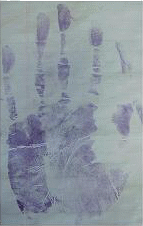
Latent prints are impressions produced by the friction ridge skin on the fingers, palms, and soles of the feet. The uniqueness, persistence, and arrangement of those ridges allow the section to determine whether two friction ridge impressions originated from the same source.
Services
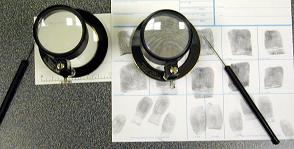
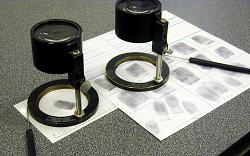
Criminalists in the Latent Print section examine submitted evidence for the presence of friction ridge skin impressions. They develop, preserve, and collect these impressions. After discovery of unknown impression evidence, they compare the unknown prints against submitted known prints.
Upon completing the comparison, the examiner renders a scientific conclusion and writes a report of the results of the examination. Criminalists can be called upon to testify in courts of law as to the results of their examination.
Techniques and Equipment
Fingerprints are placed into a computerized database called the Automated Fingerprint Identification System, known as AFIS. AFIS allows a fingerprint to be entered and searched by points of identification within the finger, so that a print left at a crime scene can be searched and identified before or during examination by a criminalist.
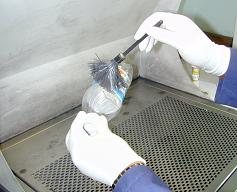
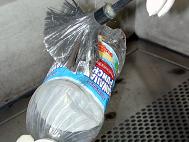
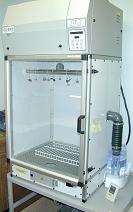
A variety of techniques are used in the detection and development of latent prints, including chemicals, powders, alternate light sources, and other physical means.
Professional Organizations and Resources
Get in touch
Contact the Crime Laboratory
Office hours are 8:00 AM to 4:30 PM, Monday through Friday.