
Relocation notice
The Crime Laboratory is moving to 135 N. Chestnut Street
The Missouri State Highway Patrol Crime Laboratory, currently located at 1510 East Elm Street, Jefferson City, Missouri, will be relocating to a new facility at 135 N. Chestnut Street, Jefferson City, Missouri, on or about January 1, 2027. Please update your records to reflect the new Crime Laboratory address:
Missouri State Highway Patrol
Crime Laboratory
135 N. Chestnut Street
Jefferson City, MO 65101
Additional information regarding the transition, including any changes to evidence submission procedures or services, can be obtained by contacting the laboratory at (573) 526-6134.
The new building is the State of Missouri Multi-Agency Laboratory Campus, which will also house laboratories for the Departments of Health and Senior Services, Natural Resources, Agriculture, and Conservation. Read about the project (opens on oa.mo.gov).
About the Section
Drug Chemistry forensic scientists conduct chemical analyses of evidence confiscated during criminal investigations involving dangerous drugs and clandestine laboratories.
As an expert witness, the forensic scientist presents their findings in a court of law.
What the Section Examines
Examination Types
Instrumental Analysis
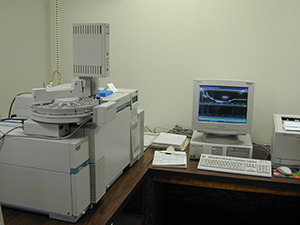
Gas Chromatography / Mass Spectrometry
The gas chromatograph separates a mixture into its component parts and delivers them to the mass spectrometer, which breaks the molecules into ions and records the resulting spectrum. That spectrum conclusively identifies the compound.
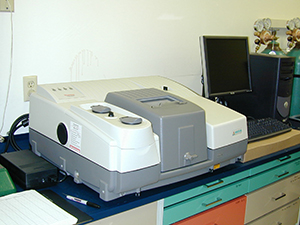
Fourier Transform Infrared Spectroscopy
FT-IR identifies compounds based on their infrared absorption characteristics. The spectra produced are used to conclusively identify compounds.
Plant Material Examination
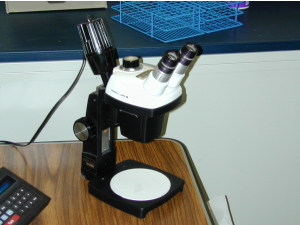
Microscopy
Microscopes are used to examine plant material and identify morphological characteristics specific to marihuana.
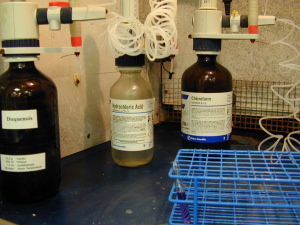
Modified Duquenois-Levine Color Test
A purple hue indicates a positive result. Where this is achieved alongside a positive thin layer result, the specimen may be concluded to contain THC, the active constituent in marihuana.
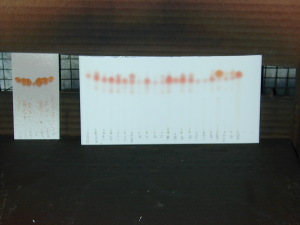
Thin Layer Chromatography
TLC separates the components of a mixture of organic molecules, which are then compared against a known standard, providing a reasonably reliable basis for identifying a compound.
Presumptive Testing
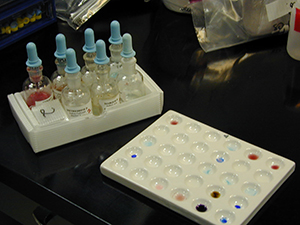
Screening Tests
Also called color tests, these tentatively identify possible components of a mixture. Similar to the screening tests officers perform in the field, they indicate which further tests are needed to conclusively identify a substance.
Thin Layer Chromatography
TLC separates the components of a mixture of organic molecules, which are then compared against a known standard, providing a reasonably reliable basis for identifying a compound.
Drug Classifications
Depressants
Depressants, used in small amounts, produce a sedative or calming effect.
Excessive use of this class of drugs induces symptoms such as slurred speech, staggered gait, and altered perceptions.
Medically, these drugs are usually prescribed to aid sleep and relaxation, and to relieve stress and irritability.
Tolerance can develop quickly, with additional medication required to achieve the effects experienced after initial use.
Depressants commonly seen by the laboratory include diazepam (Valium), alprazolam (Xanax), lorazepam, and clonazepam. Barbiturates such as amobarbital and pentobarbital are seen occasionally.
Hallucinogens
Hallucinogenic drugs distort the user's perception of objective reality. Taken in high quantities, delusions and hallucinations are characteristic of this class of drugs.
Users commonly experience unpleasant psychological reactions, including panic, anxiety, loss of control, and disorienting flashbacks.
Hallucinogens commonly seen by the laboratory include lysergic acid diethylamide (LSD), psilocybin mushrooms, phencyclidine (PCP), and mescaline (peyote cactus).
Marihuana
Marihuana makes up a substantial portion of the drug evidence the crime laboratory receives. The botanical name for marihuana is Cannabis, and the portions of the plant typically submitted are the leaves and the flowering tops.
Historically, the plant was used as a source of fiber (hemp), its seeds were a food source, and it had some rudimentary medicinal uses.
The plant material is typically smoked, using either a pipe or a hand-rolled cigarette. Manifestations of use include euphoria, an altered sense of time, lack of motivation, and difficulty concentrating and forming concepts. Psychological dependence is commonly associated with its use.
Narcotics
Narcotics are a class of drugs that produce insensibility or stupor through their depressant effect on the central nervous system.
Medically, narcotic refers to the poppy, opium and its derivatives (morphine, codeine, heroin), or to synthetic substitutes such as meperidine and methadone.
As a class, narcotics produce euphoria while relieving fear, tension, and anxiety. Other effects include slowed and slurred speech, slow gait, constricted pupils, droopy eyelids, impaired night vision, vomiting, and constipation.
Narcotics commonly seen by the laboratory include morphine, codeine, heroin, hydrocodone, and oxycodone (OxyContin).
Steroids
Anabolic steroids are a class of drugs closely related to the male sex hormone testosterone.
Their limited medical use includes treatment of certain types of anemia, growth deficiencies, and severe burns.
Steroid use alongside a workout regimen is typically aimed at increasing weight and muscle mass, though the effects diminish quickly once use is discontinued.
Physiological side effects are extensive, and are often accompanied by depression and the onset of aggressive behavior.
Stimulants
Stimulants are a class of drugs that directly affect the central nervous system.
As a class, stimulants produce heightened alertness, excitation, pupil dilation, increased blood pressure, increased respiration, and a marked decrease in appetite.
Stimulant abuse can lead to stroke and heart attack. Most stimulants are controlled substances available by prescription for medical purposes. Uncontrolled stimulants include caffeine and nicotine.
Other well-known stimulants commonly seen by the laboratory include cocaine, methamphetamine, amphetamine, methylphenidate (Ritalin), and ephedrine or pseudoephedrine.
Where the Section Operates
The Drug Chemistry section works from laboratory locations at Cape Girardeau, Carthage, Park Hills, Jefferson City, Springfield, St. Joseph, and Willow Springs.
Get in touch
Contact the Crime Laboratory
Office hours are 8:00 AM to 4:30 PM, Monday through Friday.